Food blogging is evolving every year. But in 2026, it remains an exciting way to build an audience. You can share recipes. You can even create a full-time income online. You can post short recipe videos on TikTok. Also, you can post long-form recipe guides ranking on Google. Nowadays, food content is everywhere, & the audiences are still hungry for newer ideas.
What makes today’s blogging landscape different is accessibility. You no longer need coding knowledge or expensive developers for a professional-looking website. In this writing, you’ll learn how to start a cooking blog in 2026. You can learn about choosing a niche. You will also know how to create content & monetizing your channel.
Pick Your Cooking Blog Niche
There is a big mistake that new food bloggers make. They try to appeal to everyone. A general cooking blog is extremely competitive today. This is because thousands of creators have already published many recipe content.
⏳ Unlocked: Free Files of the Month
Every month, Envato Elements shares a hand-picked collection of premium design assets for free. Download templates, fonts, and graphics before the month ends!
🔥 Download Free Assets Before It ResetsInstead, successful bloggers emphasise a specific niche. Thus, they can stand out from the crowd.
Some important cooking blog niches in 2026 are-
- Healthy cooking & diet-focused recipes
- Carnivore, keto, vegan, or gluten-free meals
- Budget-friendly family meals
- Quick recipes for office workers
- Regional & cultural cuisine
- Meal prep & fitness-oriented cooking
- Air fryer / slow cooker recipes
- High-protein recipe blogs
Selecting a niche helps you build a recognizable brand. It will surely attract a loyal audience faster.
Before committing to a niche, validate demand by researching Google search trends. You must use Pinterest keywords, TikTok hashtags, & YouTube recipe categories. If people are consistently searching for that type of content, there is likely room for your blog to reach them.
Pick a Blog Name & Brand Identity
Your blog name is the 1st thing readers remember. So, choose something simple. You can go with something memorable & easy to spell.
A robust cooking blog name should-
- Show your niche/cooking style
- Be simple to pronounce
- Works well as a domain name
- Dodge needless numbers/symbols
Examples include-
- Carnivore Kitchen Daily
- 10-Minute Meal Lab
- The Budget Bite Plate
- Keto Family Table
Your branding also matters. Think about the feeling you want readers to experience when they read your blog. Bright & colourful designs work well for family-friendly recipes. Meanwhile, minimalist looks can suit fitness / carnivore-focused blogs.
You can also use online name generators. You can use branding tools for inspiration when brainstorming ideas.
When selecting a domain name, keep it short whenever possible. You can choose a “.com” extension if available.
Set Up Your Website
You will have to set your niche and brand 1st. Then, you can time to build your cooking blog website.
Many beginners now prefer using a modern website builder. This is because it simplifies the setup process. It can remove the requirement for coding knowledge.
Some important platforms are-
- WordPress
- Wix
- Squarespace
- Shopify (for food product sales)
- Canva Website Builder
Platforms like Canva have become increasingly popular. This happens among creators. This is because they use drag-and-drop simplicity. They also provide visually appealing templates for beginners.
A basic cooking blog should include some essential pages. See below-
Home Page
Your homepage introduces visitors to your brand. This is for highlighting your latest or most popular recipes.
About Page
People love connecting with food bloggers personally. Share your story. Let them know about your cooking background. You can also post what inspired your blog.
Recipes Page
Organize your recipes clearly. Thus, visitors can easily browse your content.
Contact Page
Make it easy for brands, readers, and collaborators to reach you.
Mobile optimization is also critical in 2026. This is because most recipe searches now happen on mobiles. Your website should load quickly. It must display nicely on all screen sizes.
Get Hosting and Domain (If Needed)
Do you want to select a self-hosted platform like WordPress? Then, you will need hosting & a domain name.
A domain is your website address. Meanwhile, hosting stores your website files online.
Most beginner hosting plans cost between $3 & $15 per month. But the cost hinges on features & traffic limits.
Many website builders already include hosting & security. They can count the templates in one package. This makes setup much simpler for 1st time bloggers.
For beginners, bundled solutions will reduce technical headaches. You can then focus more on creating recipes. Also, you can focus on growing your audience.
Design Your Cooking Blog
A successful food blog should be visually appealing. Meanwhile, this must stay easy to surf through.
Readers visit recipe websites for quick information. That is why cluttered layouts can drive them away.
Try concentrating on-
- Clean page layouts
- Easy-to-read fonts
- Clear recipe formatting
- Fast-loading images
- Organized navigation menus
Food photography also plays a major role in blog success. You do not need expensive cameras to begin with. Many food bloggers now create excellent content using modern smartphones. They make use of natural lighting. In addition to photos, many creators also repurpose content into different formats for Pinterest, social media, and downloadable recipe guides. Online design tools like Canva’s PDF to JPG converter make this easier by allowing bloggers to quickly convert recipe PDFs into high-quality images for sharing across platforms.
Organize your recipes into categories such as:
- Breakfast
- Lunch
- Dinner
- Snacks
- Desserts
- High-protein meals
- Meal prep recipes
Good organization improves user experience. This helps search engines know your site’s structure.
Create Your First Blog Content
Publishing quality content is the basis of every fruitful cooking blog.
Start by creating 5 to 10 high-quality posts. You’ll need to do this before officially promoting your site.
A strong recipe blog post should include-
Ingredients List
Use simple formatting. This should have exact measurements for clarity.
Step-by-Step Instructions
Break down each cooking step. This needs to be done with clarity & logic.
Cooking Tips and Variations
You can offer ingredient substitutions. You can serve suggestions. Plus, you can customize ideas.
SEO Optimization
Recipe SEO is extremely important for traffic growth.
For example, you must not target a broad phrase like “chicken recipe”. You can use more precise keywords such as-
- Easy chicken adobo recipe
- High-protein carnivore chicken recipe
- 15-minute keto chicken dinner
Also optimize-
- Meta descriptions
- Page titles
- Image alt text
- Recipe headings
Search-friendly formatting improves your chances of ranking on Google.
Add Essential Features
As your cooking blog grows, certain features become important. These can improve user experience & audience retention.
Some nice additions are-
- Printable recipe cards
- Search functionality
- Email newsletter signup forms
- Pinterest sharing buttons
- Instagram feed integration
- Comment sections for reader engagement
These features help visitors a lot. They can interact with your content. Specifically, such features can result in repeated traffic.
Learn Basic Food Blog SEO
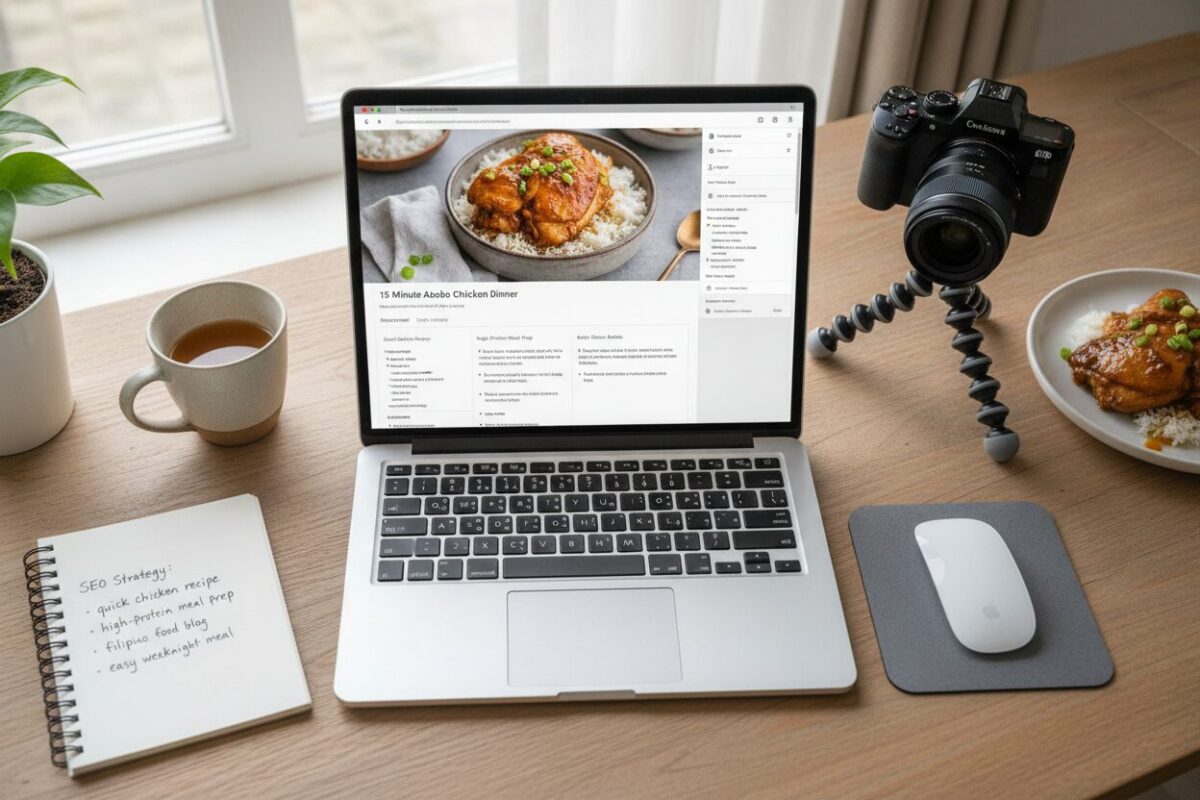
SEO is the best long-term traffic strategy for cooking blogs.
Social media posts disappear quickly. But search-optimized recipe content can continue generating traffic for years.
You should stress on-
Keyword Research
Find recipe phrases people actually search for. You can use keyword tools & autocomplete suggestions.
Pinterest Optimization
Pinterest is the strongest traffic source for food bloggers. Vertical recipe pins with convincing titles will perform well.
Internal Linking
Link related recipes together naturally. For example, connect a carnivore steak recipe to side dishes. Or you can link it to meal prep guidelines.
Balancing Google and Social Media
Google users normally want detailed instructions. But TikTok & Instagram audiences need quick, entertainment-style content.
Understanding both styles is important. Thus, you can maximize online visibility on all the platforms.
Monetize Your Cooking Blog
Firstly, your blog should attract traffic. But there are many ways to generate income.
Affiliate Marketing
You can recommend kitchen tools & cookware. You can endorse ingredients. Or you can promote meal delivery services. This way, you can earn commissions from purchases.
Display Ads
Platforms like Google AdSense and Mediavine empower bloggers. They can earn revenue through website traffic.
Sponsored Content
Food brands frequently partner with creators. They can do this for recipe collaborations & product promotions.
Digital Products
Many bloggers sell-
- Meal plans
- Recipe ebooks
- Cooking guides
- Printable shopping lists
One must diversify income streams. This can create more stable, durable earnings.
Grow Your Audience
Publishing recipes alone is not enough. Successful bloggers actively promote their content. They do this across several channels.
Use TikTok and Instagram Reels
Short recipe videos can generate massive visibility. These are sure to attract new readers to your blog.
Build Pinterest Traffic
Pinterest works exceptionally well for evergreen recipe content.
Start an Email List
Email marketing lets you talk straight to readers. You will be able to drive repeat traffic. You can do this whenever you publish new recipes.
Collaborate With Other Food Bloggers
Guest posts, recipe collaborations, & social media partnerships can expand your reach more quickly.
Consistency is an important factor in the growth of any blog.
Common Mistakes to Avoid
Many cooking blogs fail. This is because creators overlook vital rudiments.
Dodge the mistakes written below-
Inconsistent Posting
Uneven publishing makes it difficult to build audience momentum.
Ignoring SEO
Even great recipes may face issues. This may happen without ideal search optimization.
Poor Food Photography
Low-quality visuals cut engagement. These can make recipes less good-looking.
Targeting Too Broad an Audience
Specific niches often grow faster than normal food blogs.
Focusing on quality, consistency, & audience requirements is important. This gives your blog a much stronger chance of succeeding.
Conclusion
Opening a cooking blog in 2026 is very much doable. Thanks to modern content platforms & social media exposure. The beginner-friendly website builder tools also play a big part in this.
You can choose the right niche. Then you can create valuable recipe content. You can optimize them for SEO. Try promoting your blog consistently. You can build an engaged audience. You can also turn your cooking hobby into a money-making online firm.
The most important thing here is to start simple & stay consistent. Always try to improve your content over time. It won’t matter whether you focus on carnivore recipes, quick family meals, or fitness-friendly cooking. There are still openings to build a successful food blog.